
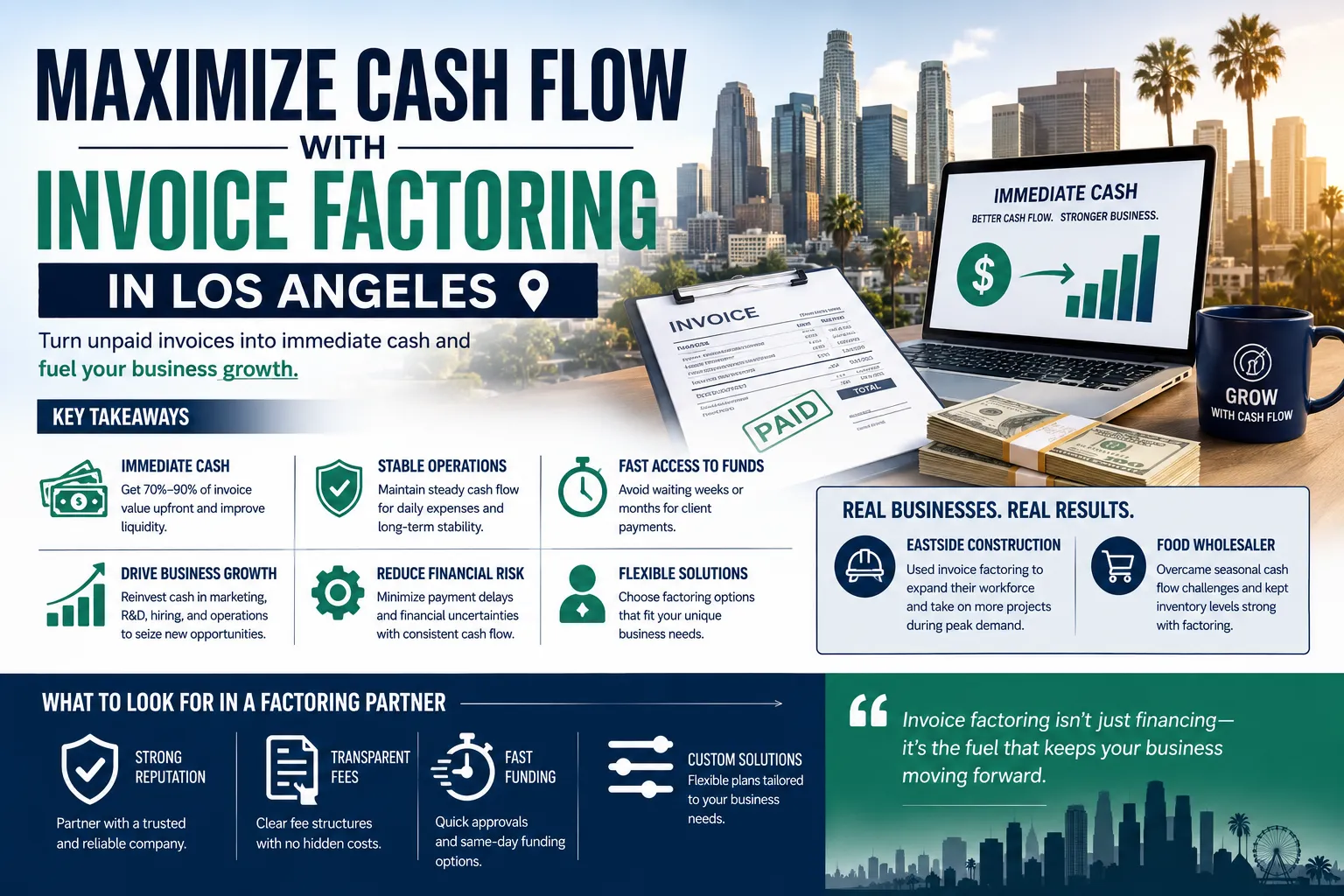
Key Takeaways
Invoice factoring provides businesses with the opportunity to transform accounts receivable into immediate cash, thereby improving liquidity and ensuring operational stability. This financial strategy grants companies the ability to receive cash upfront, avoiding the long wait for client payments that can stretch for weeks or even months.
Typically, factoring companies advance between 70% to 90% of the invoice amount, delivering essential funds needed for daily operational expenses. Once the client settles the invoice, the remaining balance is released to the business, with any applicable fees deducted.
There are notable success stories around invoice factoring, such as Eastside Construction, which leveraged it to expand their workforce during peak demand, and a food wholesaler that navigated seasonal cash flow challenges by keeping inventory levels steady through factoring.
When selecting a factoring partner, businesses must scrutinize factors such as the company’s reputation, the clarity of their fee structures, the speed at which they provide funding, and whether they offer customizable solutions to cater to specific needs.
A clear understanding of the fee structure is vital for enterprises that engage in invoice factoring, as this usually encompasses discount rates and administrative fees, both of which impact overall profitability.
For many businesses, invoice factoring serves as a catalyst for growth, freeing up cash that can be reinvested into marketing, research and development, or operational enhancements, empowering them to seize market opportunities with confidence.
Utilizing invoice factoring for risk management purposes can effectively reduce financial uncertainties and delays, ensuring stable cash flow that supports ongoing operations and strategic initiatives.
The Art of Invoice Factoring: Boosting Cash Flow Efficiently
What is Invoice Factoring and How Does it Work?
Invoice factoring is much more than a mere financial instrument; it often represents a critical resource for companies aiming to maintain adequate liquidity. When a business opts to sell its accounts receivable to a third party, known as a factoring company, it effectively turns future income into cash. Here’s how it breaks down: rather than waiting 30 to 90 days for client invoice payments, businesses can access substantial amounts of those invoices upfront—often within a swift 24 to 48 hours.
So, how does the mechanism of factoring function? Initially, a firm submits outstanding invoices to a factoring company, which then assesses the creditworthiness of those invoices. If those invoices are approved, the factoring firm advances a portion of the invoice total—typically ranging from 70% to 90%. The rest of the amount is retained in reserve until the client pays the bill, at which point the fees are deducted, and the remainder is returned to the business.
The advantages are unmistakable. This financing option enables businesses to maintain their daily operations without encountering cash flow shortages, while allowing them to allocate funds toward growth or capitalize on emerging opportunities. Ensuring stable cash flow can prove to be the pivotal factor that propels a business towards success.
Real-World Success Stories: Businesses Thriving with Factoring
Take, for instance, Eastside Construction, a small yet rapidly growing company in Los Angeles. Facing an increase in workloads alongside limited cash reserves, they turned to invoice factoring Los Angeles. Within a matter of days, they converted their accounts receivable into immediate cash. This influx enabled them to hire additional workers precisely when demand escalated, ultimately strengthening their competitive position.
Another illustrative case is that of a local wholesaler operating in the food industry who struggled to manage seasonal cash flow fluctuations. Engaging a factoring company allowed them to convert unpaid invoices into vital capital, which helped them maintain inventory levels without interruptions. Their ability to stock up during peak seasons gave them a strategic advantage over competitors who could not keep up.
“Businesses utilizing invoice factoring often notice a turnaround in cash flow that can redefine their growth trajectory.”
These narratives underscore that invoice factoring is not solely about immediate cash; it is about paving the way to sustainable growth and resilience.
Choosing the Right Invoice Factoring Partner
Key Attributes to Look for in a Factoring Company
Selecting the appropriate factoring partner is far more than an administrative step; it is a crucial strategic choice. A robust partnership can significantly enhance a business’s functional efficiency. Here are some essential traits businesses should consider:
- Reputation and Reliability: Research the history of the factoring firm. What feedback do other businesses provide regarding their experiences?
- Transparent Fees: Grasp all associated costs. Aiming to avoid hidden fees is vital, so clarify terms from the outset.
- Speed of Funding: Some factoring companies promise quick funding, while others may drag their feet. Assess their commitments before finalizing partnerships.
- Tailored Solutions: Seek out flexibility in service offerings. Does the factoring company have the capacity to adapt to unique business requirements?
By clarifying these aspects, businesses can enter partnerships that align with their objectives and values.
Understanding Fees: What to Expect and Why They Matter
Like any financial service, grasping the fee structure of a factoring company is essential. Typically, fees consist of two main components: the discount rate and administrative or service fees. The discount rate, applied to the invoice total, might range from 1% to 5% based on the client’s creditworthiness and various other factors. Also, administrative fees may apply for processing invoices or establishing the factoring agreement.
- Discount Rate: This area is ripe for negotiations. A favorable rate can dramatically impact profitability.
- Service Fees: These charges can accumulate rapidly, making clarity on the entire fee structure non-negotiable.
- Advance Rate: This refers to the portion of the invoice value that the factoring company is willing to provide upfront.
Understanding these fees goes beyond mere budget considerations; it’s a central element in maximizing the advantages of factoring. Many companies discover that a slightly higher fee can deliver substantially better service or faster funding.
The Impact of Invoice Factoring on Your Business Growth
Scaling Operations: How Factoring Fuels Expansion
Invoice factoring stands as a vital springboard for businesses looking to expand. With immediate cash available, companies are no longer governed by invoice payment timelines when managing operational costs. They can reinvest these funds into marketing, research and development, or even broaden product lines. Imagine a startup that lands a sizable contract but lacks the initial capital to fulfill it. Factoring empowers them to pursue opportunities without the burden of cash flow limitations.
For businesses poised for growth, implementing factoring can drive a significant shift in operational models from reactive to proactive. Companies can respond to market demands with agility, empowered by funds that can be accessed ahead of traditional payment cycles.
“Invoice factoring is like fuel for a business engine – without it, growth stalls.”
Achieving expansion necessitates more than just ambition; it requires resources, and that’s precisely where factoring steps in.
Mitigating Financial Risks: A Strategic Approach
Effective risk management is a cornerstone of any business strategy. Invoice factoring provides a clear route for mitigating financial risks. By converting receivables into cash, businesses can create a buffer against potential downturns or unforeseen expenses.
- Buffer Against Delayed Payments: Many businesses contend with clients that pay slowly. Factoring guarantees that operations remain unaffected.
- Credit Risk Assessment: Factoring firms typically assess the creditworthiness of clients upfront, thereby sharing some of the risk burden.
- Stable Cash Flow: Consistent cash flow decreases the likelihood of encountering shortages during quieter operational periods.
Utilizing factoring as a risk management strategy not only protects existing resources but also unveils new opportunities. Businesses are then positioned to make informed decisions with a steady cash supply at their disposal.
Best Practices for Using Invoice Factoring
Maximizing Your Fund Availability: Tips from the Pros
To fully harness the benefits of invoice factoring, a strategic mindset is required. Below are several recommendations from seasoned experts:
- Regularly Review Client Creditworthiness: Monitor the credit profiles of clients to ensure that invoices sent for factoring represent minimal risk.
- Maintain Accurate Records: Well-organized documentation expedites the approval process. A tidy approach can lead to quicker funding.
- Communicate with the Factoring Company: Establishing a strong line of communication often results in a more beneficial partnership. Share plans, forecasts, and any operational changes regularly.
These practices assist businesses in sustaining cash flow, thereby maximizing the efficiency and effectiveness of the factoring setup.
Common Use Cases: Industries That Benefit Most from Factoring
Invoice factoring caters to various industries, yet certain sectors find greater advantages due to their operational characteristics. Here are a few where it excels:
- Manufacturing: Companies frequently encounter extended production cycles. Factoring offers immediate resources to cover ongoing expenses.
- Transportation and Logistics: Fleet operators often navigate slow payment cycles. Factoring aids in maintaining operational continuity.
- Construction: Projects unfold in multiple phases, making it typical for businesses to wait for payments, thus rendering factoring invaluable.
Recognizing the specific needs of an industry enables businesses to tailor their factoring strategies for optimal effects. Understanding and applying these insights paves a clearer path for effective cash flow utilization.
As more organizations gravitate towards solutions such as invoice factoring in Los Angeles, they unlock possibilities for growth and stability. By concentrating on the nuanced details highlighted here, companies can navigate complexities and make informed decisions that drive both immediate cash flow and long-term prosperity.
FAQ
How do businesses choose the right factoring invoices for funding?
Experts suggest assessing several key factors: the reputation of the factoring company, clarity regarding their fees, and the speed of funding. Furthermore, aligning operational needs with a factoring partner that provides tailored solutions can significantly improve the overall experience.
What types of businesses benefit most from invoice factoring?
Generally, businesses involved in manufacturing, transportation, and construction derive notable advantages from invoice factoring. Each of these sectors faces distinct cash flow challenges, making factoring a crucial tool to sustain operational efficiency and spur growth.
Can small businesses effectively use invoice factoring?
Absolutely. For many small businesses, invoice factoring can be a vital asset, helping them manage cash flow and invest in growth without having to wait for client payments. It’s a pragmatic solution that can help level the playing field against larger competitors.
What role does client creditworthiness play in invoice factoring?
Client creditworthiness plays a crucial role in assessing the viability of invoice factoring. Factoring companies usually evaluate this aspect to minimize risk and determine which invoices are suitable for financing. A solid credit profile can lead to improved terms and lower fees for businesses.
What are the typical fees associated with invoice factoring?
Fees associated with invoice factoring generally consist of a discount rate—varying based on credit risk—and administrative fees. Businesses should aim to negotiate these fees to enhance their profitability and fully understand the cost structure before entering any agreements.
How quickly can a business expect funding through invoice factoring?
Funding is often rapid, typically happening within 24 to 48 hours after invoices are submitted to a factoring firm. However, timeline specifics may vary based on the firm’s policies and the client’s creditworthiness.
Does invoice factoring affect customer relationships?
In fact, invoice factoring can help bolster customer relationships by enabling timely delivery of products and services. With immediate cash flow, businesses can maintain consistent operations, thereby enhancing service levels and fostering client loyalty.
How can businesses maximize their cash flow through invoice factoring?
To achieve maximum cash flow, companies should consistently review clients’ creditworthiness and uphold meticulous records. Open communication with the factoring firm regarding operational needs and projections can also streamline processes, leading to swifter funding.
Useful Resources
- U.S. Small Business Administration
- SCORE – Counselors to America’s Small Business
- Investopedia – Financial Education
- National Federation of Independent Business
- The Balance SMB – Small Business Advice
- International Factoring Association
- Business News Daily – Tips for Entrepreneurs
- CreditCards.com – Financial Management Tips
